
FCC Advances 482 MHz for Satellite-to-Phone Service (2026): What the October 29 Vote Changes for Travelers
The FCC voted on October 29, 2026 to propose opening 482 MHz more spectrum to direct-to-device satellite service, growing eligible bands from 5 to 13. Here is what changed, what did not, and why your phone abroad still needs a data plan.
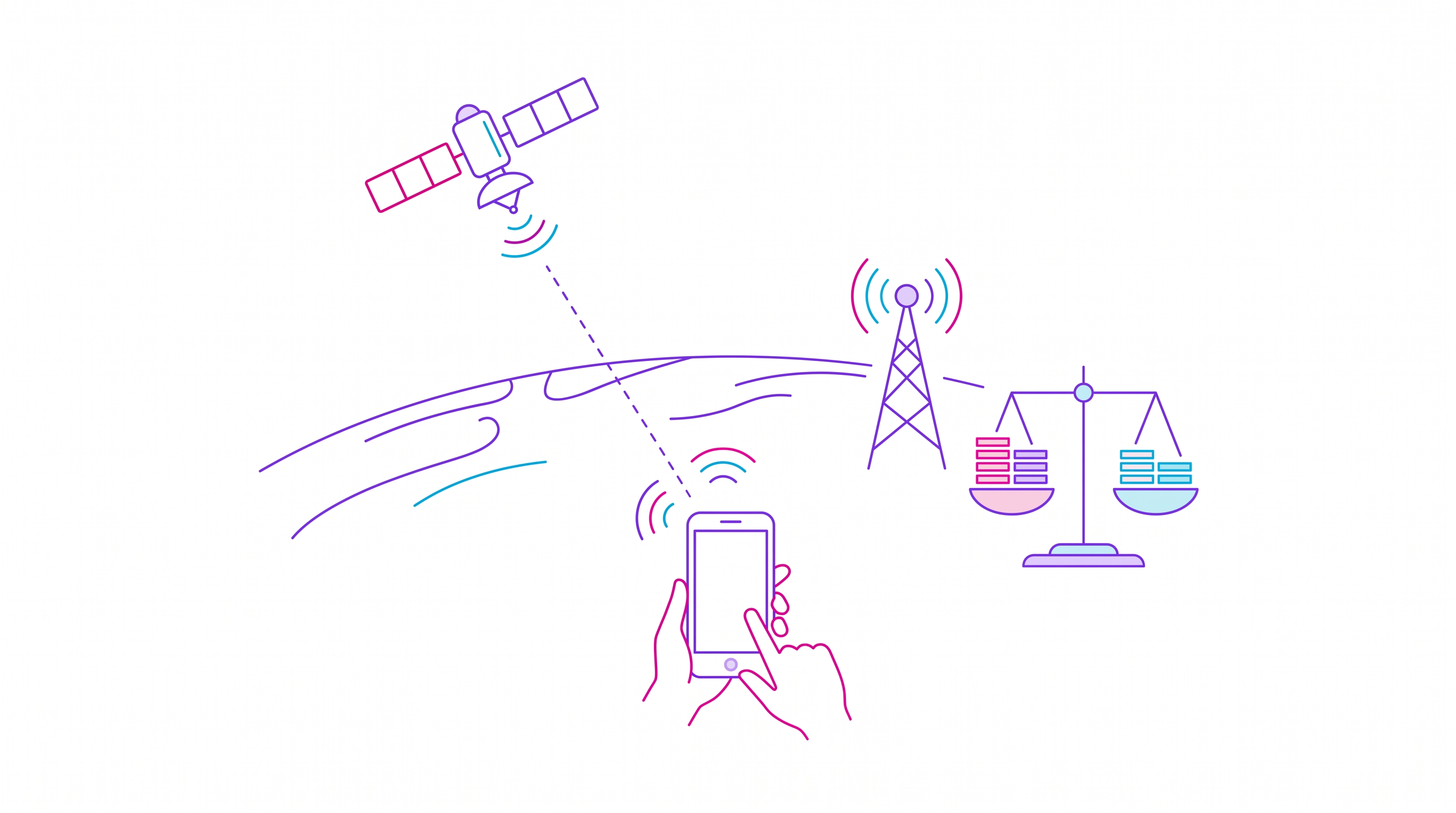
On Thursday, October 29, 2026, the US Federal Communications Commission voted to move ahead with what Chairman Brendan Carr called the agency's "most comprehensive step yet to modernize the FCC's rules for direct-to-device." The proposal would make an additional 482 MHz of spectrum available for satellite-to-phone service and expand the number of eligible bands from five to 13.
It is not a final rule. The vote adopted a notice of proposed rulemaking (NPRM), which opens a public comment period. A second vote will be needed before anything changes on the ground, and the FCC has not set a date for it.
We previewed the fight ahead of the meeting in our look at why AT&T, Verizon and T-Mobile wanted 290 MHz taken out. Here is what actually happened.
What the FCC proposed
The item, titled "Unleashing Licensed Spectrum for Direct-to-Device," updates the Supplemental Coverage from Space (SCS) framework the FCC adopted in March 2024. SCS lets satellite operators use carriers' terrestrial spectrum to reach ordinary, unmodified smartphones.
Two changes stand out:
- More bands. The 482 MHz would join the current five SCS bands, bringing the total to 13.
- No more nationwide leasing requirement. Today a satellite company must lease spectrum from every carrier holding the same airwaves across an area as large as the continental US. Under the proposal, an operator could instead certify that it has coexistence agreements with those carriers, or that it holds the ground license itself, and pick a license area covering only the places it actually serves.
The meeting also included a separate item on the 1675-1695 MHz and 2020-2025 MHz bands, setting up service rules ahead of a potential auction.
Why the carriers pushed back
Through their trade group CTIA, AT&T, Verizon and T-Mobile asked the FCC to remove the 2.5 GHz and 3.45 GHz bands, which together account for 290 MHz of the 482 MHz. Their argument is technical: those bands use time-division duplexing, while satellite-to-phone systems generally rely on frequency-division duplexing. The carriers say around 300 million users depend on the two bands.
T-Mobile's own filing claimed that where satellite signals bleed over, up to 96% of a cell site's uplink coverage area could be lost and uplink speeds could fall by 88% to 99%. It also noted the FCC considered and rejected 2.5 GHz for SCS in 2024.
The FCC's announcement did not say whether those two bands survived in the version commissioners approved. That question now moves into the comment cycle.
The bigger picture: Starlink Mobile as a carrier
The vote lands in a month when SpaceX has been assembling its own spectrum. The FCC cleared up to 15,000 next-generation direct-to-cell satellites on October 6, approved SpaceX's purchase of unused AWS-3 licenses from Tristar on October 21, and is still reviewing its deal for Grain Management's nationwide 800 MHz portfolio. SpaceX president Gwynne Shotwell has said service on its own airwaves is targeted for early 2028.
Investors noticed: AT&T and T-Mobile shares each fell more than 7% on October 23, while Verizon dropped about 1.2%. Meanwhile the FCC approved Amazon's $11.6 billion acquisition of Globalstar on October 27, with a planned fleet of up to 5,105 direct-to-device satellites expected to start deploying in 2028.
Europe is taking the opposite route: on October 19, Deutsche Telekom, Orange, Telefónica and Vodafone signed a letter of intent to explore a joint bid for 2 GHz mobile-satellite spectrum, where current licenses expire in 2027.
What this means for travelers
For your next trip, nothing changes. This is a proposal, the final rules have no date, and most of the new satellite capacity is years away. Even where satellite-to-phone works today, it is built for dead zones: texting, emergency messages and light data when there is no tower in sight. It is not a replacement for a mobile data plan in a city, an airport or a hotel.
What it does signal is a future where the line between "carrier" and "satellite provider" blurs, and where phones fall back to space more often when terrestrial coverage ends.
The practical takeaway
- Keep using terrestrial data abroad. A travel eSIM on a local network will still deliver far more speed and capacity than any satellite link in 2026.
- Check satellite support separately. Satellite features depend on your phone model, your home carrier and the country you are in. They do not usually follow you onto a travel eSIM.
- Plan for both. For remote trips, pair a travel eSIM for everyday data with your phone's built-in emergency satellite features.
If you want a data-only travel eSIM for your next trip, providers like HOLASIM let you install before you fly and connect on landing, while satellite rules keep evolving in the background.