
Japanese Travelers Can Now Use Satellite on iPhone in the US (2026): What the KDDI Rollout Means for Roaming
What happened
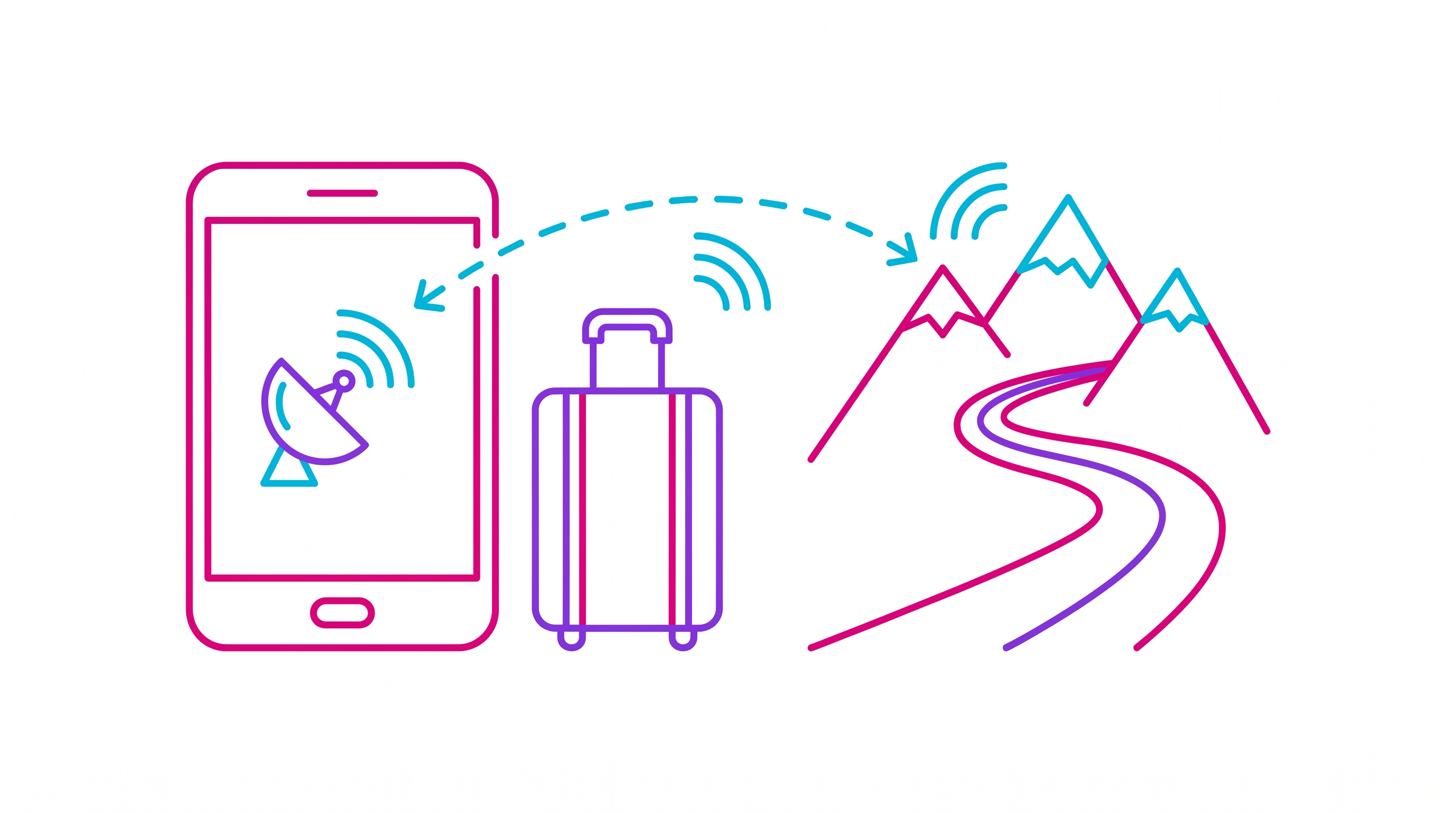
KDDI and Okinawa Cellular announced that their au Starlink Direct service, which connects phones directly to satellites for customers roaming in the United States, now supports iPhone. According to KDDI's release dated April 9, 2026, a total of 22 iPhone models can use satellite connectivity while roaming in the US, including the iPhone 13, 14, 15, 16 and 17 lineups and the iPhone Air. Users need to update to the applicable iOS version beforehand.
The background is a partnership with T-Mobile. KDDI said it partnered with T-Mobile in November 2025 to enable this capability, and that since March 2026 it has provided connectivity for international travelers in the US through au Starlink Direct, which works in out-of-coverage areas as long as the sky is visible.
Why the US was the target
The United States has large regions where terrestrial mobile coverage is limited or absent: national parks, deserts, mountain passes and long rural highways. KDDI's own framing is that a wider range of users can stay in touch with family and friends and use maps and navigation while traveling there. The iPhone update matters because iPhones make up a large share of phones in Japan, so the service moved from a feature for some Android models to something much of the customer base can use.
What it is, and what it is not
KDDI describes au Starlink Direct as a service that lets smartphones connect directly to Starlink satellites where there is no ground coverage. At home in Japan, it covers roughly the 40% of land area that terrestrial networks do not reach, since au's population coverage exceeds 99.9% but area coverage is about 60%. It supports messaging, location sharing, emergency earthquake alerts, AI consultation services and data through supported apps.
The key phrase is supported apps. This is a coverage-gap service, not a full replacement for regular mobile data. It is also tied to the carrier relationship: it works for au customers roaming in the US through the KDDI and T-Mobile arrangement. A traveler from another country, or someone on a different carrier, does not get it by default.
The lesson for travelers
This story shows where roaming is heading. Carriers are starting to bundle satellite as an add-on to roaming agreements, but each deal is bilateral: one home carrier, one partner network, a specific list of phones and a required software version. If you are not on a participating plan, nothing changes for you.
For day-to-day connectivity abroad, that leaves the same practical answer as before. A prepaid travel eSIM gives you normal data in cities, airports and hotels without depending on your carrier's roaming terms. Providers such as HOLASIM sell country and regional eSIMs you can install before departure, and you can keep your home SIM active for calls and verification codes. Make sure your phone is eSIM-capable and unlocked.
A simple checklist for the US
Before a US trip, update your phone's operating system. Check whether your carrier offers any satellite roaming and which phones it supports. Install a travel eSIM for regular data and download offline maps for areas you know have weak signal. Treat satellite as an emergency layer rather than your main connection.
Bottom line
KDDI's iPhone rollout is a clear sign that satellite roaming is becoming a standard feature of carrier deals. But it is limited to specific carriers, specific phones and supported apps. For most travelers, a travel eSIM remains the dependable base layer, with satellite as a safety net where available.