
T-Mobile Satellite Roaming in Canada and New Zealand (2026): What Travelers Actually Get
What happened
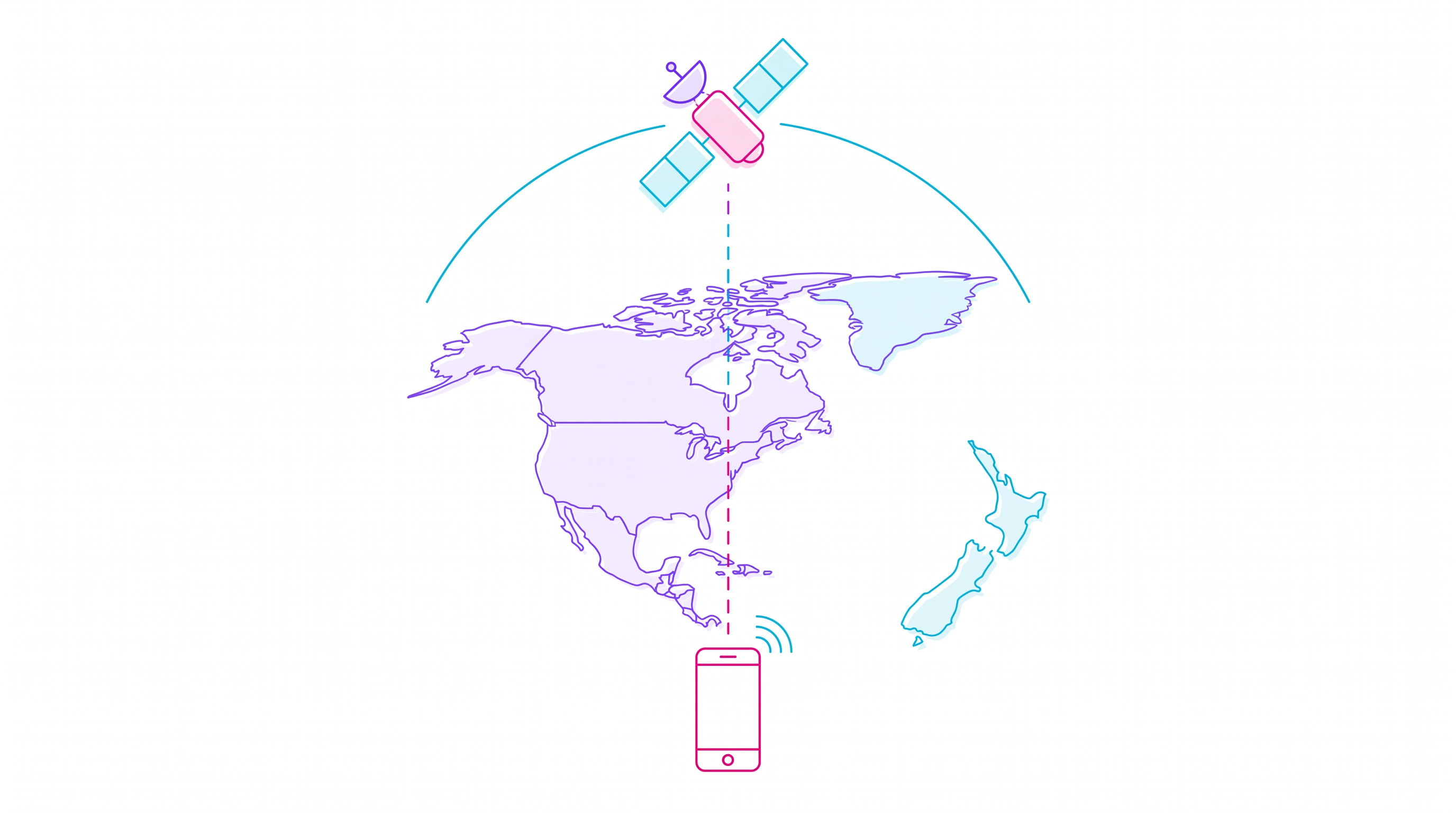
T-Mobile has extended its international roaming agreements with Rogers in Canada and One NZ in New Zealand so that they now include satellite coverage. In plain terms, a T-Mobile customer who travels to those two countries can, in principle, stay reachable in places where no cell tower reaches, as long as the phone has a clear view of the sky. In Canada, reports put the satellite coverage at up to the 58th parallel, which takes in a very large share of the country's land area outside the big cities.
This is one of the first cases where satellite-to-phone service has crossed a border as a roaming product rather than staying a domestic feature. That matters because, until recently, "satellite texting" was something you used at home or not at all.
What it does not cover
It helps to be precise, because headlines tend to blur the details. Several travel guides published in October 2026 note that international satellite roaming from T-Mobile currently reaches only Canada and New Zealand. Other countries where Starlink has carrier partners, such as Australia and Japan, offer the service through the local carrier to its own subscribers. That does not automatically extend to a visiting T-Mobile customer.
The second limit is what the service can do. The same guides describe satellite connectivity as far more limited than normal mobile data. Messaging and basic connectivity are the focus, while general data use such as browsing or streaming maps is not something travelers should count on yet. A bigger jump in capacity is expected only in the second half of 2027.
Why it matters for travelers
Satellite roaming is a safety net, not a replacement for a data plan. Think of a hiker in the Canadian backcountry or a driver on a remote New Zealand road: a satellite text can be the difference between waiting for help and being able to ask for it. But for the 95% of a trip that happens in towns, airports, hotels and cafés, you still need normal data for maps, ride-hailing, translation, boarding passes and messaging apps.
There is also a cost question. Satellite roaming applies to carrier customers who are on a supported plan with a supported phone. If you are not a T-Mobile customer, or your plan does not include it, you get nothing from this announcement. Meanwhile, standard carrier day passes remain expensive: a recent roaming guide lists AT&T and Verizon international day passes at around $12 per day for one line outside Mexico and Canada, before taxes and fees on Verizon.
What to do before you fly
If you are heading to Canada or New Zealand with a T-Mobile line, check your plan and device support before you rely on satellite coverage, and update your phone's operating system. Do not treat it as your main connection.
For everyday connectivity, a prepaid travel eSIM is still the practical default. You install it before you leave, switch it on when you land, and keep your home number and SIM for calls and verification codes. Providers such as HOLASIM sell regional and country plans, so you can match the data amount to the length of your trip instead of paying a daily roaming fee. Check device compatibility first: your phone must be eSIM-capable and carrier-unlocked.
A sensible setup for remote travel is simple: a travel eSIM for towns and cities, offline maps downloaded in advance, and satellite roaming, if your carrier offers it, as the emergency layer on top.
Bottom line
T-Mobile's satellite roaming in Canada and New Zealand is a real step, but a narrow one. It covers two countries, it is limited in what it can carry, and it only applies to eligible carrier customers. For most travelers in 2026, the best approach is still a travel eSIM for daily use and satellite as a backup.