
Nearly 70% of the Mobile Market Now Has a Satellite Partner in 2026: What It Means for Travelers
GSMA Intelligence says operators covering just under 70% of global mobile subscribers have signed at least one satellite deal. Here is what that does, and does not, change for your next trip.
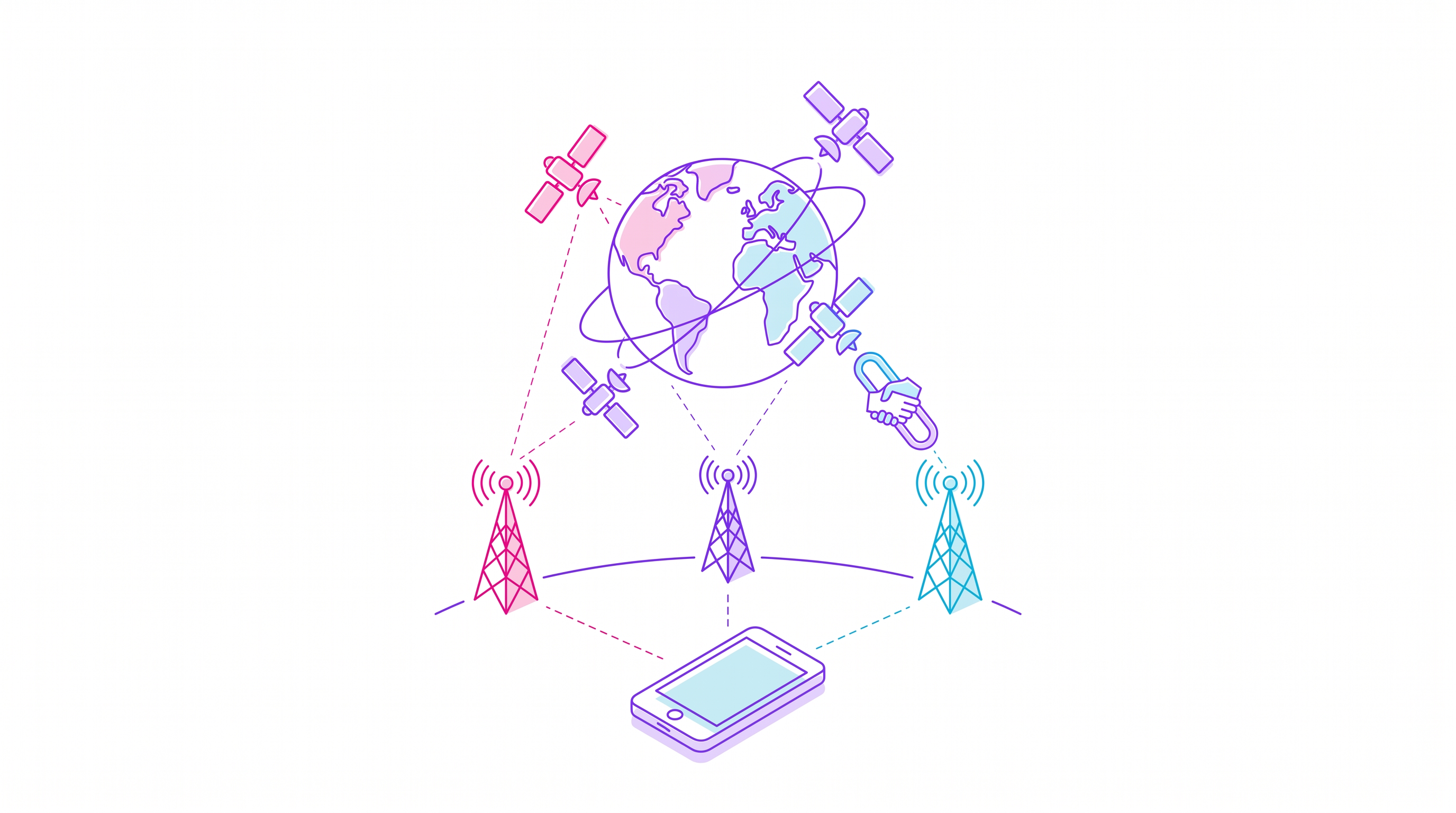
Satellite-to-phone connectivity has quietly crossed a threshold. According to the latest quarterly tracker from GSMA Intelligence, published on October 22, 2026, mobile operators that together cover just under 70% of the global mobile market now have at least one satellite partnership. The research arm of the GSMA says that means satellite and non-terrestrial networks (NTN) have "entered the telecoms mainstream."
What GSMA Intelligence actually measured
The number is easy to misread, so it is worth being precise. The tracker counts the subscriber footprint of operators that have signed at least one satellite deal, not the number of people already using satellite service on their phones. On average, those operators have 1.5 satellite partners each, which suggests carriers are hedging their bets across several providers instead of betting on one.
Tim Hatt, head of research and consulting at GSMA Intelligence, said there is "some regional variation, but not a huge amount. This is very much a global phenomenon." Coverage, not new revenue lines, remains the main commercial driver: operators want to extend reach and defend their network-quality reputation.
Starlink is still the one to beat
The tracker also highlights how dominant SpaceX has become. GSMA Intelligence estimates that Starlink controls about 90% of deployed orbital satellite capacity, measured across all satellites in space. Hatt noted that Starlink's connectivity business was growing at around 66% a year and has now reached roughly 69%, with improving margins as revenue rises against a largely fixed cost base.
This lines up with recent milestones, such as Starlink Mobile connecting 11 million VEON customers in under a year.
Consolidation and "sovereignty" are the new themes
Two other trends stand out in the report:
- Consolidation. Only a few companies own the full stack of launch, satellites, connectivity and ground infrastructure. SpaceX is one, and Amazon is expected to become another. GSMA Intelligence pointed to Rocket Lab's planned acquisition of Iridium, the SES and Intelsat combination, and the earlier Eutelsat-OneWeb merger as signs that scale is now essential.
- Sovereignty. Governments increasingly treat orbital infrastructure as strategic. In Europe, large carriers are studying collective action on mobile satellite spectrum, a story we covered when Europe's four biggest carriers teamed up for satellite-to-phone spectrum.
Why this matters if you travel
For travelers, the headline is encouraging but the timeline is long. Hatt called direct-to-device "a 10-year phenomenon," and GSMA said broader coverage across much of the world could emerge toward the end of the decade, depending on rollouts.
A few practical points from the report:
- Usage stays low where land coverage is good. GSMA's Barbara Pareglio said usage remains low in densely covered countries like Japan, even when satellite service is technically available. Bigger opportunities are in places with wide coverage gaps, such as the United States, Australia and New Zealand.
- In Europe, satellite is a backup layer. Extensive 4G and 5G coverage means fewer situations where you would ever need it.
- Roaming is the open question. Hatt said consumers may value continuity "wherever they travel within a country and potentially when roaming abroad," but that depends on national licensing. Local regulation decides who can offer satellite service in each market.
- Africa is a priority region, since it has the highest share of people still outside mobile coverage.
What to do on your next trip
Satellite texting may save you on a remote hike, but it will not replace mobile data for maps, ride-hailing, messaging and banking apps in the cities where you actually spend your trip. That still runs on terrestrial 4G and 5G networks.
The practical setup for 2026 looks like this:
- Use a travel eSIM for everyday data. It connects you to local networks at local speeds, usually for far less than carrier roaming. Providers like HOLASIM let you install the eSIM before departure so you land already connected.
- Check if your home plan includes satellite messaging and whether it works outside your country. Many do not yet.
- Download offline maps before heading to national parks, deserts or long road trips, where neither cell nor satellite coverage is guaranteed.
The 70% figure tells you where the industry is heading. For the trip you are planning now, a reliable travel eSIM is still what keeps you online.