
Europe's Four Biggest Carriers Team Up for Satellite-to-Phone Spectrum in 2026: What It Means for Travelers
Deutsche Telekom, Orange, Telefónica and Vodafone signed a letter of intent on 19 October 2026 to explore a joint bid for Europe's 2 GHz satellite band. Here is what changes for travelers, and what does not.
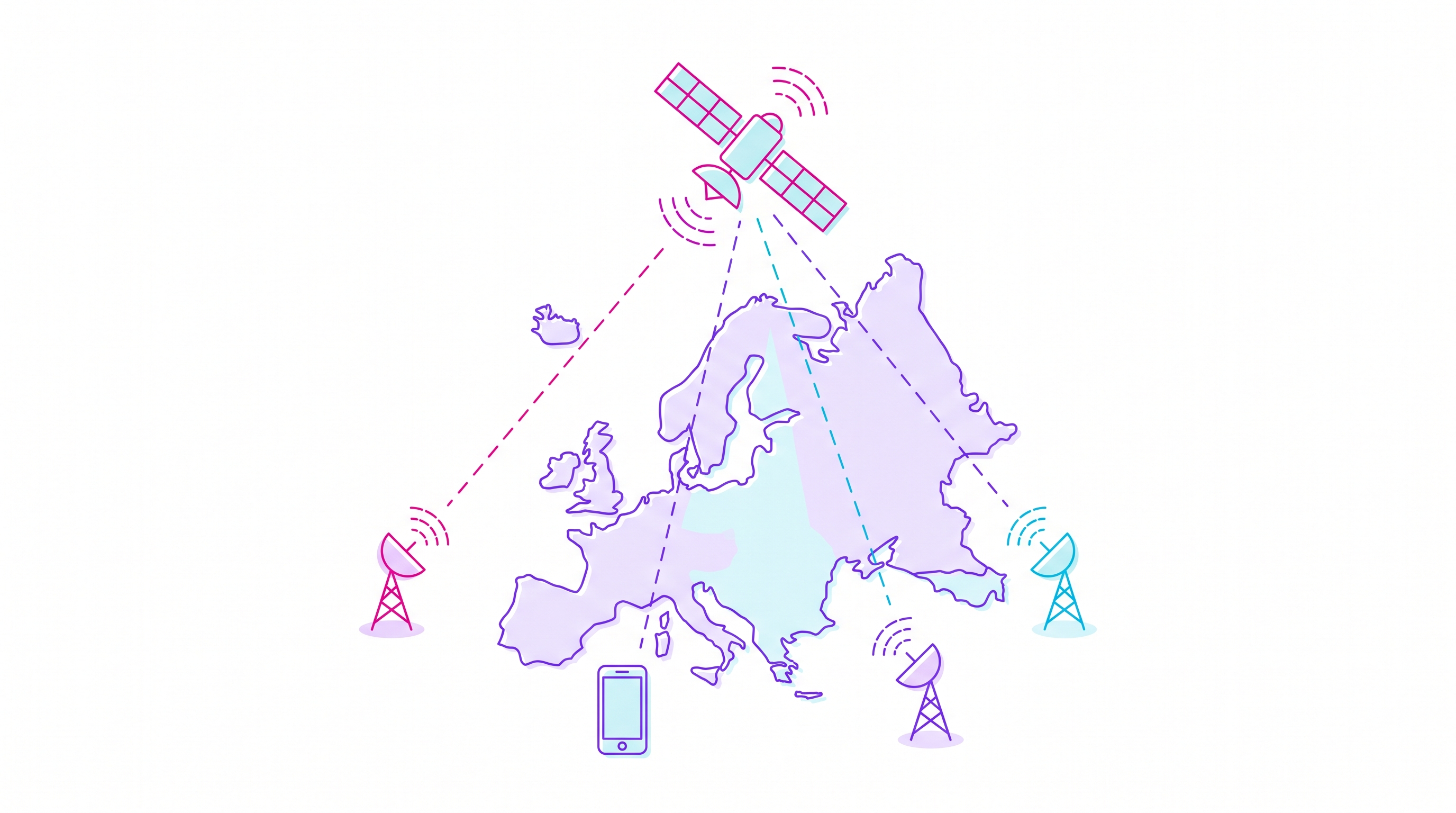
Europe's four largest mobile operators — Deutsche Telekom, Orange, Telefónica and Vodafone — signed a letter of intent on 19 October 2026 to explore a joint bid for the continent's mobile satellite services (MSS) spectrum. The goal: a European-run direct-to-device (D2D) service that lets ordinary smartphones connect to satellites where no cell tower reaches.
It is the clearest sign yet that Europe's carriers want their own answer to SpaceX's Starlink. But for anyone planning a trip in the next year or two, the details matter more than the headline.
What was actually signed
The agreement is exploratory. According to the operators' joint announcement and coverage by Heise, Mobile World Live and Space Intel Report:
- The four groups will explore a joint bid for the 2 GHz MSS band — the frequencies Europe uses for satellite-to-mobile services.
- They plan to build the ground network infrastructure plus coordination and monitoring functions across Europe.
- They will not build or launch satellites themselves. A satellite partner has not been named yet.
- Other mobile operators would get open, non-discriminatory access to offer D2D services on top of the network.
- There is no timetable and no financial terms. No bid has been submitted.
Why the 2 GHz band is the prize
Today, rights to Europe's 2 GHz satellite band are held by EchoStar and Viasat, and they expire in May 2027. The EU is still working through the rules for the next allocation. One proposal reported this week splits the band into six coupled 5 MHz blocks, with one third reserved for EU governmental communications linked to the IRIS² programme and another third for EU commercial services.
Whoever wins this spectrum gets to decide how satellite texting, calling and data reach European phones for the next decade. That is why a joint bid from operators with a combined footprint across Germany, France, Spain, the UK and dozens of other markets is significant.
Where Starlink and AST SpaceMobile fit
The letter does not cancel existing partnerships. Deutsche Telekom already works with Starlink, while Vodafone and Orange work with AST SpaceMobile, including through Vodafone's Satellite Connect Europe joint venture. AST currently has 13 BlueBird satellites in orbit and targets around 45 by early 2027; its shares rose about 4% to $42.24 after the news.
Meanwhile, Starlink's own European phone service is not expected before 2028 — we covered that timeline in Starlink direct-to-cell in Europe. And another European satellite-to-phone venture, Equatys, has already been funded with a 2029 horizon (details here).
Why it matters to travelers
Satellite D2D is designed for the gaps: mountain passes in the Alps and Pyrenees, ferries between islands, rural roads in Scandinavia, hiking trails with no coverage. When it arrives, it will most likely start with emergency messaging and texting, then basic data.
Three practical takeaways:
- Nothing changes for your next trip. The letter has no launch date, and the spectrum itself is not available until after May 2027.
- Access may come through your carrier — or not. Because the plan is built around operators, satellite access will probably depend on which network your SIM or eSIM connects to and what it has agreed with the satellite partner.
- Terrestrial coverage is still what you will use 99% of the time. Europe's 4G and 5G networks cover cities, highways and most tourist areas.
How to stay connected in Europe today
Until satellite-to-phone becomes routine, the cheapest way to stay online across Europe is still a travel eSIM on local terrestrial networks:
- Check your phone supports eSIM and is carrier-unlocked before you leave.
- Pick a regional Europe plan if you are crossing borders, so you do not need a new eSIM in each country.
- Install before departure and activate on landing, keeping your home line on for calls and WhatsApp.
- Download offline maps for remote areas where neither towers nor satellites will help yet.
Providers like HOLASIM offer Europe-wide eSIMs that connect to the major local networks — including those run by the four operators behind this bid — so you get their terrestrial coverage now, without waiting for the satellites.
We will keep tracking the 2 GHz auction rules and the satellite partner announcement as they develop.