
iPhone Duo Is eSIM-Only Worldwide in 2026: What Apple's First Foldable Means for Travelers
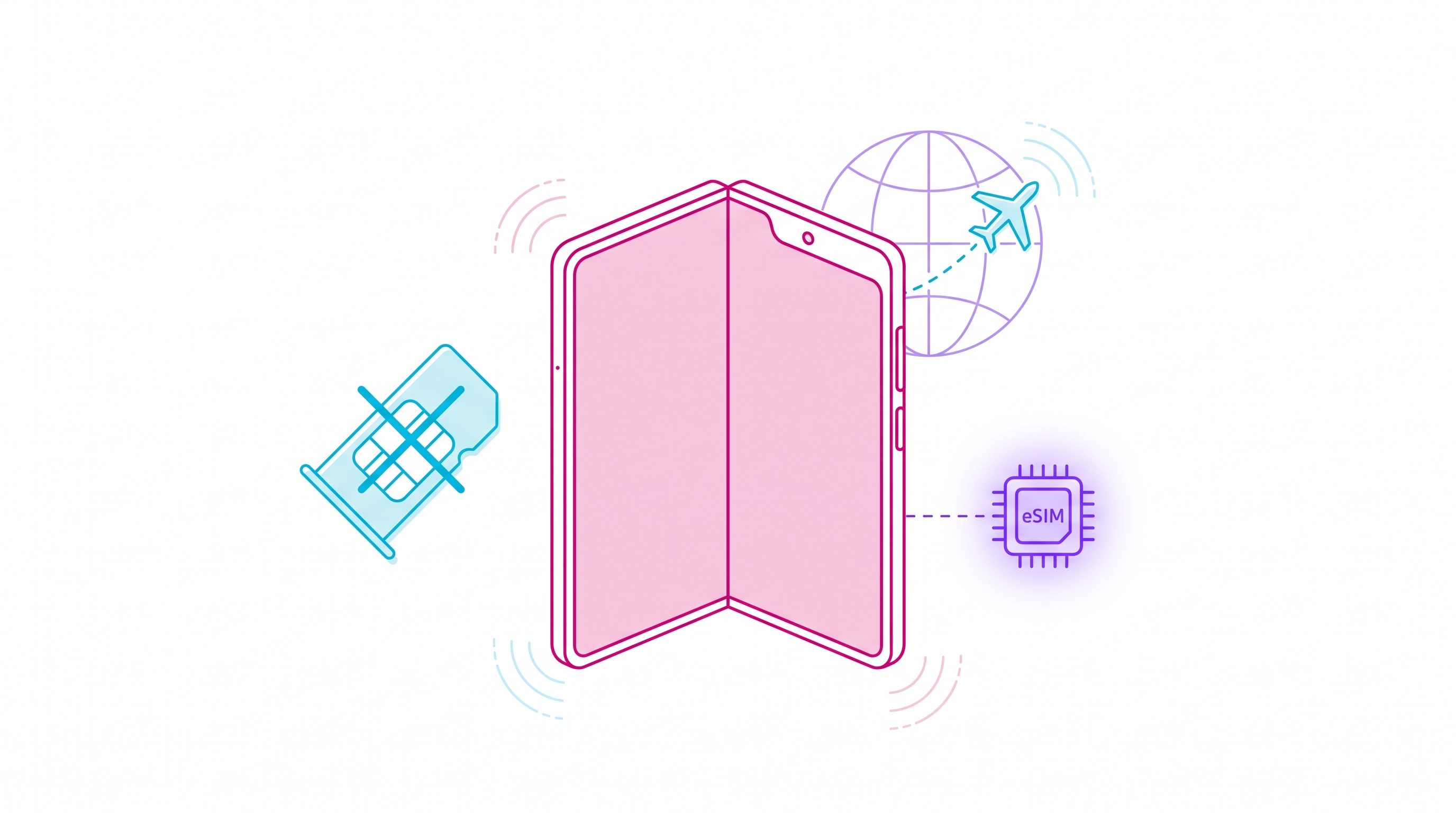
Apple's first foldable iPhone is here, and it settles a question travelers have been asking all year: the iPhone Duo is eSIM-only in every country where it is sold. There is no physical SIM tray, and unlike the iPhone 18 Pro, there is no regional exception.
What happened
Pre-orders for the iPhone Duo opened on October 16, 2026, with general availability starting October 23 in more than 70 countries and regions. A second wave of 28 additional countries follows on October 30.
Pricing starts at $1,999 in the US, with Europe listed at around €2,339 and the UK at £1,999. The phone pairs a 7.6-inch inner display with a 5.4-inch outer screen, and uses Touch ID instead of Face ID.
On connectivity, Apple's specs are blunt: the Duo is not compatible with physical SIM cards. Instead it supports dual eSIM with two active lines at once and up to eight stored eSIM profiles.
Why this matters for travelers
This is a bigger shift than it looks. When the iPhone 18 Pro launched in September, Apple went eSIM-only in just 12 markets and Europe kept its SIM tray. With the Duo, that safety net is gone everywhere — including Europe, Latin America and Asia.
In practice, that means:
- No more buying a plastic SIM at the airport kiosk. If a local shop only sells physical SIMs, it simply won't work in an iPhone Duo.
- Your home line and a travel line can run side by side. With two active eSIMs, you can keep your home number for calls, SMS and two-factor codes while a travel eSIM handles data.
- Eight stored profiles is a frequent-flyer feature. You can keep plans for several countries or regions on the phone and switch between them in Settings, without deleting and reinstalling.
It also fits a broader trend. The Trusted Connectivity Alliance reported that consumer eSIM profile downloads in the first half of 2026 nearly matched the full-year 2025 total, a sign that eSIM-only phones are pushing travelers toward digital plans faster than many expected.
What to check before your next trip
If you are buying an iPhone Duo — or any eSIM-only phone — a few habits will save you money and stress abroad:
- Install your travel eSIM before you fly. Do it on home Wi-Fi, then switch the line on when you land. Downloading a profile on airport Wi-Fi is where most activation problems start.
- Set mobile data to the travel line, not your home line. Leave your home line on for calls and texts if you need them, but turn off data roaming on it to avoid surprise charges.
- Make sure the phone is carrier-unlocked. An eSIM-only device still needs to be unlocked to accept a third-party travel eSIM. Phones bought outright from Apple usually are; carrier-financed ones may not be.
- Use your stored profiles wisely. Label each eSIM by country or trip so you know which one to turn on when you land.
- Check coverage and data needs, not just price. A cheap plan that tops out at a small amount of data can end up costing more than a larger one if you use maps, video calls or hotspot.
The bottom line
The iPhone Duo is the clearest signal yet that the physical SIM card is on its way out for travelers. If you are upgrading, the good news is that eSIM-only makes international connectivity simpler, not harder: you can buy, install and activate a data plan from your phone before you even pack.
Travel eSIM providers such as HOLASIM let you install a plan in minutes and keep your home number active alongside it — exactly the dual-line setup the iPhone Duo was built for. Whatever provider you choose, compare data allowance, validity and coverage for your destination before you buy.