
HOLASIM vs ByteSIM (2026): Which Travel eSIM Is Actually Better?
ByteSIM has sharper unlimited pricing and local coverage in mainland China; HOLASIM never expires and supports three languages. We compare price, throttling, hotspot limits and support side by side.
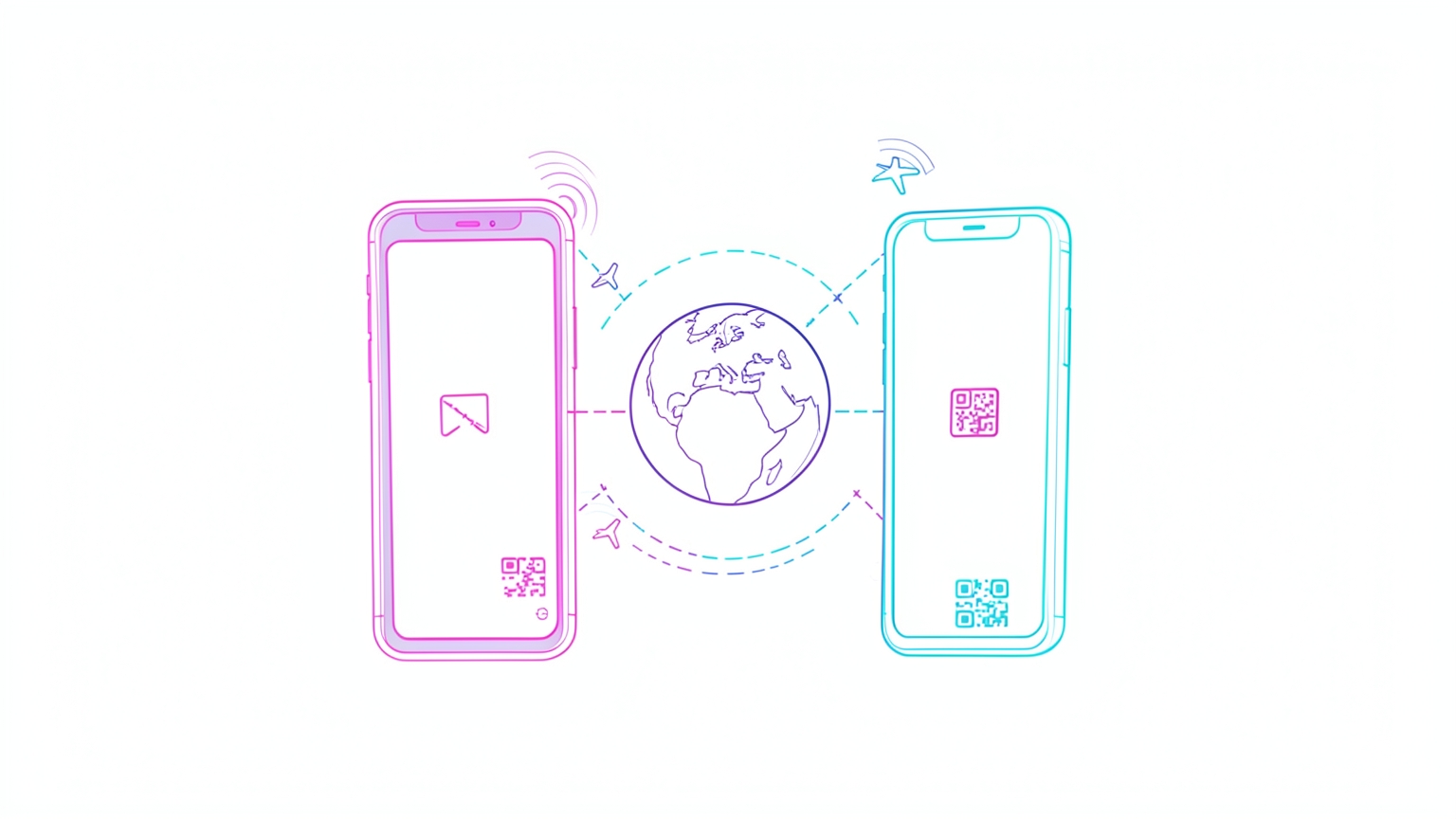
ByteSIM wins on raw unlimited pricing and is one of the very few travel eSIMs with genuine local coverage in mainland China; HOLASIM wins on an eSIM that never expires, multilingual human support and the flexibility of both fixed and unlimited plans — so the right answer depends almost entirely on where you are going and how often you travel.
These two sit in different corners of the same market. ByteSIM is a fast-growing, aggressively priced operator-style brand that was shortlisted for Best eSIM Provider at the 2026 Mobile Industry Awards and has built its reputation on unlimited plans and Asia coverage. HOLASIM is an Argentine-founded provider built around a permanent eSIM profile, Spanish- and Portuguese-language support, and a product aimed squarely at Latin American and Iberian travellers who the big global brands tend to serve in English only.
HOLASIM Overview
HOLASIM covers 200+ destinations and sells both unlimited and fixed-data plans, starting from around USD 1.70. Its defining feature is that the eSIM profile itself never expires: you install it once and top it up for each new trip, rather than buying and installing a new profile every time you fly.
Reasons to choose HOLASIM:
- The eSIM never expires — install once, recharge per trip, no reinstall
- 200+ destinations with both unlimited and fixed-data plans, so you are not locked into one pricing model
- 24/7 support with real people in English, Spanish and Portuguese
- Instant QR activation; install at home, switch on when you land
- Entry pricing from ~USD 1.70 for light users
- Normal hotspot and tethering, with no daily sharing cap
Reasons to avoid HOLASIM:
- Unlimited plans cost more than a comparable fixed-data bucket — if you use 3 GB a week, the fixed tier is the smarter buy
- Smaller brand footprint than Airalo, Holafly or ByteSIM, so fewer third-party reviews to read before you buy
- No standout China-specific product
ByteSIM Overview
ByteSIM lists 200+ destinations — Europe 42+, Asia 34+, the Americas 33+, Africa 30+ and Oceania 8+ — with entry pricing from roughly USD 2.50 and a product line split between daily-allowance plans (1, 2 or 3 GB per day), fixed buckets and unlimited plans. Its standout technical claim is a native local IP and, in Japan, dual KDDI and SoftBank network access.
Reasons to choose ByteSIM:
- Among the few travel eSIMs with real local coverage in mainland China, where most providers roam or fail
- Competitive unlimited pricing — Japan unlimited runs from roughly USD 11–12 for 3 days to about USD 63–80 for a month, depending on the source
- Unlimited hotspot on most plans, with no data-sharing cap
- Strong app: 4.6/5 on the App Store and roughly 4.4/5 on Google Play across ~1,800 reviews, with real-time usage tracking
- 24/7 WhatsApp and email support, frequently answering in under five minutes
- 6-month money-back guarantee and loyalty tiers that discount future purchases
- Independently tested at 40–90 Mbps on 5G in Tokyo
Reasons to avoid ByteSIM:
- "Unlimited" plans throttle hard — one independent test measured a drop to 128 kbps after the fair-use threshold, which is barely usable
- No direct top-up: when a plan runs out you buy and install a new eSIM
- Some products expire if not activated within 180 days
- English-only support, and USD-only pricing
- Reported friction activating on some US carriers, including an IMEI/EID form with up to a 24-hour delay
- Published pricing is inconsistent across ByteSIM''s own pages and third-party listings
Head-to-head: HOLASIM vs ByteSIM
| HOLASIM | ByteSIM | |
|---|---|---|
| Entry price | ~USD 1.70 | ~USD 2.50 |
| Destinations | 200+ | 200+ |
| Unlimited data | Yes | Yes, with FUP throttling to ~128 kbps |
| Profile expiration | Never expires | Some products expire if unactivated in 180 days |
| Hotspot / tethering | Yes, no daily cap | Yes, no daily cap on most plans |
| 5G | Yes | Yes |
| Support | 24/7, human | 24/7 WhatsApp and email |
| Support languages | English, Spanish, Portuguese | English only |
| App | Yes | Yes (4.6 App Store / ~4.4 Google Play) |
| Top-ups | Yes, recharge the same eSIM | No direct top-up; buy a new eSIM |
| Currency | USD | USD only |
Coverage
On paper both claim 200+ destinations, and for the routes most travellers fly — Europe, North America, Southeast Asia, the Gulf — the practical difference is negligible. Where they diverge is China.
ByteSIM has invested in genuine local coverage in mainland China rather than the roaming workarounds most travel eSIMs use, and independent reviewers consistently cite this as its single strongest differentiator. If Beijing, Shanghai or Shenzhen is on your itinerary, that advantage is real and hard to replicate. ByteSIM''s Japan coverage is also notably robust, with access to both KDDI and SoftBank.
HOLASIM''s coverage strength is breadth and continuity rather than any one market: the same permanent profile works across its full 200+ destination list, which matters more if your travel pattern is several short trips to different places than one long trip to Asia.
Pricing and value
Entry pricing favours HOLASIM slightly — around USD 1.70 against ByteSIM''s roughly USD 2.50 — but entry tiers are small and this gap is largely symbolic.
On unlimited plans, ByteSIM is the more aggressive of the two. Its Japan unlimited ladder has been reported at roughly USD 10.90 for 3 days, 23.90 for 7, 50.50 for 15 and 79.90 for 31, while an independent review citing TechRadar put the same range at about USD 12 to USD 63. Those figures do not reconcile, which is itself worth flagging: ByteSIM''s published prices vary across its own pages and third-party listings, so verify at checkout rather than trusting a comparison table — including this one.
The honest caveat on both sides: HOLASIM''s unlimited plans cost more than its fixed-data equivalents, and if your real consumption is a few gigabytes a week you should buy the fixed tier and keep the difference. ByteSIM''s unlimited plans are cheaper but the throttle makes them a different product — see below.
Unlimited data
This is the clearest practical split between the two.
ByteSIM''s unlimited plans operate under a fair-use policy, and one independent tester measured post-threshold speeds dropping to 128 kbps — slow enough that maps, image-heavy pages and any video become painful. ByteSIM''s own marketing describes "no throttling, no slowdowns," which that measurement contradicts. Within the high-speed allowance, performance is good: 40–90 Mbps on 5G in Tokyo, with only isolated dropouts in mall basements and on the subway.
HOLASIM also sells unlimited plans and is transparent that they carry a premium over fixed-data tiers. Neither provider offers truly uncapped data at full speed indefinitely — essentially no travel eSIM does — but the useful question is how hard the fall is and whether the provider says so up front.
If you need predictable high-speed data for a defined number of days, a fixed bucket sized to your actual use is usually the better product from either brand than an unlimited plan from either.
Support and user experience
ByteSIM''s support is fast and well-reviewed: 24/7 over WhatsApp and email, often answering within five minutes, staffed by technically competent agents. The limitation is language — it operates in English only, which is a genuine problem if you are troubleshooting an activation failure in an airport and English is not your first language.
HOLASIM''s support runs 24/7 with human agents in English, Spanish and Portuguese. For Latin American, Spanish and Brazilian travellers, that is the decisive difference, and it is the reason HOLASIM exists as a separate product rather than a cheaper clone of the global brands.
On mechanics, ByteSIM has the better-rated app but the worse lifecycle: no direct top-up means running out mid-trip requires buying and installing a fresh eSIM, and some products expire if not activated within 180 days. HOLASIM recharges the same profile indefinitely. ByteSIM counters with a 6-month money-back guarantee and loyalty discounts, which HOLASIM does not match.
Which should you choose?
- Backpacker: ByteSIM if your route runs through Asia and especially China. HOLASIM if you are moving between continents over months and want one profile you never reinstall.
- Business traveller: HOLASIM. Permanent profile, no 180-day activation clock, no risk of needing to install a new eSIM between a Monday flight and a Thursday one. ByteSIM''s lack of top-up is a real friction when you travel on short notice.
- Family: Either, but check hotspot terms. Both allow uncapped tethering on most plans, which is better than Holafly''s 1 GB/day limit. ByteSIM''s per-day allowance plans are easy to budget for a family of four sharing one connection.
- Digital nomad: ByteSIM for a long Asia stint, with a fixed-data plan rather than unlimited so you never hit the 128 kbps floor. HOLASIM if you want one eSIM you keep for years, and if working in Spanish or Portuguese matters when something breaks.
FAQ
Is ByteSIM legitimate?
Yes. It was shortlisted for Best eSIM Provider at the 2026 Mobile Industry Awards, holds roughly 4.6–4.8 across thousands of verified reviews, and has apps with six-figure download counts. One reviewer noted a moderate Scamdoc trust score, attributed mainly to WHOIS privacy rather than any service issue.
Which one is cheaper?
ByteSIM is generally cheaper on unlimited plans; HOLASIM has a lower entry price and a cheaper path for light users via fixed-data tiers. Compare the plan you would actually buy, not the headline minimum.
Can I top up either eSIM mid-trip?
HOLASIM, yes — you recharge the same permanent profile. ByteSIM, no — there is no direct top-up, so you buy and install a new eSIM when a plan is exhausted.
Does either work in mainland China?
ByteSIM is the stronger choice: it offers genuine local coverage in mainland China, which most travel eSIM providers do not. Check the specific plan before buying, and note that China''s network restrictions affect app access regardless of which eSIM you use.
Do both support hotspot and 5G?
Yes, both support 5G and allow hotspot use on most plans without a daily sharing cap. This is a meaningful advantage both hold over Holafly.
Which has better support?
ByteSIM is faster in English. HOLASIM is the only one of the two that supports Spanish and Portuguese, which matters more than raw response time if English is not your working language.
Verdict: if your travel is Asia-heavy and China is on the map, ByteSIM is the better buy — just size a fixed-data plan rather than relying on its unlimited tier. If you travel several times a year across different regions, want to install an eSIM once and never think about it again, or want support in Spanish or Portuguese, HOLASIM is the better long-term product. Neither is a bad choice; they are solving different problems.